Blog
How to Raise Meat Chickens: Breeds, Care, Feeding, and Processing
Raising meat chickens at home or on a small farm is a great way to produce high-quality protein for your household. Meat birds require relatively little space compared to other livestock and can be integrated into a wide range of setups, making them a flexible option for backyards, small properties, and many different management styles. Whether your goal is food security, better-tasting meat, or greater transparency in how your food is raised, growing your own meat birds can be a practical and rewarding experience.
Before getting started, it helps to understand what makes meat birds different from other types of chickens, how breeds vary, and what their specific care requirements are. This guide walks through the full process, from choosing the right bird through processing, so you can plan effectively and avoid common mistakes.
For a condensed overview you can reference anytime, download our quick guide to raising meat chickens (print-friendly version here), which is shown above, and summarizes the key steps from planning through processing.
Table of Contents
-
Understanding Meat Birds
-
Planning Your Grow-Out
What is a meat bird?
Historically, some traditional breeds were developed for meat quality, and many dual-purpose breeds can still be raised for both meat and eggs. However, these birds grow much more slowly, require longer grow-out periods, and produce smaller carcasses than birds bred specifically for meat. Their feeding programs, timelines, and overall management differ significantly from modern broilers.
Today’s meat birds are typically hybrid strains developed through decades of selective breeding to improve feed efficiency, growth rate, and consistency.
Feed conversion (sometimes called Feed Conversion Ratio, or FCR) describes how efficiently an animal converts feed into body weight. A lower feed conversion means less feed is required to produce the same amount of meat, making the bird more efficient.
Meat Bird Breeds
The most common meat bird breeds raised today fall into two main categories: fast-growing Cornish Cross broilers and slower-growing alternative hybrid broilers.
What is a Cornish Cross meat bird?
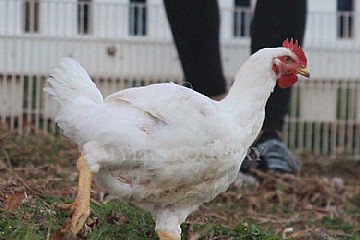
The Cornish Cross is the most common meat chicken breed raised in the United States. It is a fast-growing broiler bred for efficient feed conversion and a high proportion of breast meat, typically reaching a processed weight of 4.5 to 6 pounds in 6 to 8 weeks.
Cornish Cross chickens are popular for their exceptional feed conversion, predictable growth, and large breast meat. While they are often raised indoors, they can also be raised on pasture when managed carefully. Pastured Cornish Cross birds benefit from fresh air and movement but still require close attention to feeding rates, growth, and processing timing due to their rapid development.
Because of their fast growth, Cornish Cross broilers are more prone to health issues if overfed or kept beyond their intended grow-out window. Leg stress and cardiovascular problems are more likely when birds gain weight faster than their skeletal system can support. Careful feeding and timely processing are key to success.
It is also important to note that hatcheries may use slightly different parent lines to produce Cornish Cross birds. As a result, growth rate, final size, and behavior can vary. Growers should always follow the feeding and management recommendations provided by the hatchery they purchase from.
What are alternative hybrid broiler chickens?
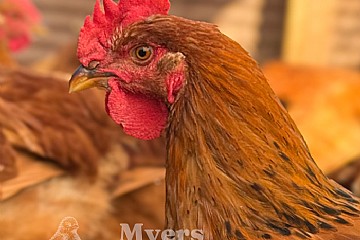
Alternative hybrid broilers are slower-growing meat chickens developed as a middle ground between Cornish Cross broilers and traditional or dual-purpose breeds. Common examples include Red Sasso, and Freedom Ranger.
These birds typically reach market weight between 8 and 15 weeks. Their slower growth rate often provides a wider margin for error in feeding and management, which many growers find more forgiving—particularly in outdoor or pasture-based systems.
In terms of meat characteristics, alternative hybrids usually produce a firmer texture and a higher proportion of dark meat compared to white meat yield. Many growers report that these birds develop richer fat than Cornish Cross, which may contribute to deeper flavor; however, outcomes can vary based on diet, processing age, and overall flock management.
A Note about the Delaware Cross
While the Delaware Cross is considered a dual-purpose breed and lays around 200-280 eggs a year, it was bred to be a hybrid meat bird and fills out in the same amount of time as an alternative hybrid broiler.
| Feature | Cornish Cross | Alternative Hybrid Meat Birds |
|---|---|---|
| Typical grow-out time | 6-8 weeks | 8-15 weeks |
| Feed efficiency | High (excellent efficiency) | Moderate (less efficient than Cornish Cross) |
| Growth rate | Fast | Moderate |
| Breast meat yield | High proportion of breast meat | Typically lower breast yield, more balanced carcass |
| Activity level | Low to moderate | Moderate to high |
| Foraging behavior | Limited | Stronger natural foraging |
| Best fit for | Growers prioritizing speed and feed efficiency | Growers prioritizing activity, flexibility, and certain flavor profile |
These are general ranges; timelines can vary by strain, weather, and management approach. The best meat bird for you depends on your priorities. Cornish Cross chickens are ideal if you want the fastest and most feed-efficient path from chick to freezer. Alternative hybrid broilers are better suited for growers who want a more active bird, a longer grow-out window, or a firmer, more traditional-tasting meat.
Planning and Early Care for Meat Birds
Successful meat bird production starts before chicks ever arrive. Planning ahead helps prevent common problems, ensures you have the right equipment and space, and sets realistic expectations for growth and care.
Time of YearMeat birds are best raised in spring and fall, when temperatures are more moderate. Prolonged heat above 80°F can slow growth and increase stress in older birds, making cooler seasons better suited for broiler production.
Vaccination
Decide whether you want your hatchery to vaccinate chicks for diseases such as coccidiosis or Marek’s disease. Learn more about how these diseases affect chickens and vaccination options in our Marek’s disease and coccidiosis guide.
How many birds to raise
The right number of meat birds depends on how much chicken you plan to eat and what you can realistically manage.
A useful approach is to work backward. Estimate how many whole chickens your household uses in a year—many families plan for about one bird per week, or roughly 50 birds annually. Then decide whether to raise them all at once or in multiple batches.
Space and equipment also matter. Larger numbers require more brooder space, larger feeders and waterers, increased feed storage, and a realistic processing plan. Even experienced growers are often limited by how many birds they can process comfortably in a single day.
If you are new to raising meat birds, starting with a smaller group—such as 15 to 25 birds—allows you to learn the process before scaling up.
For a step-by-step approach, download our guide for deciding how many meat birds to raise (print-friendly version here).
The First 24 Hours: Brooding Meat Chicks
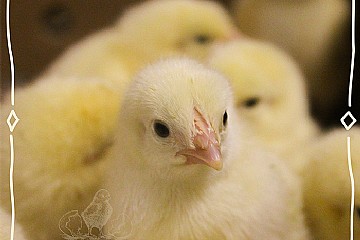
The first 24 hours after chicks arrive are critical. Your brooder should be fully set up at least a day in advance so temperature, bedding, and equipment are stable.Plan for one 1-gallon waterer per 25 chicks, spread evenly throughout the brooder. Newly arrived chicks are often very thirsty and tend to crowd water sources, so multiple access points help ensure all birds drink.
Because broiler chicks ship immediately after hatching, prompt pickup and placement into a prepared brooder is essential. Upon arrival, chicks should be encouraged to drink by gently dipping their beaks into water and observed closely to confirm they are active and adjusting well.
Meat birds grow faster than laying breeds and require a higher-protein starter feed (20–24% protein) to support early muscle development, along with constant access to clean water. A draft-free brooder with dry bedding and a reliable heat source helps maintain comfort as chicks learn to regulate body temperature.
For a step-by-step introduction to brooding basics, see our Chick Brooding for Beginners guide.
Once birds are settled and growing, daily management centers on feeding, water access, and housing.
Feeding Meat Birds
Feeding is one of the most important factors in raising healthy meat birds. Because broilers grow much faster than laying breeds, they require different feed formulations and, in many cases, different feeding schedules.
What Food Should Meat Birds Eat?
Meat birds require specialized, high-protein broiler feed fed at different life stages. Most feeding programs use:
-
Starter feed: approximately 20-24% protein during early growth, typically through weeks 3-4
-
Grower or finisher feed: approximately 16-19% protein once birds are past early growth and continuing until processing
This is a guideline rather than a fixed rule and may vary by breed, growth rate, and management style. Always use feed labeled specifically for broilers or meat birds, as these formulations are designed to support rapid muscle development rather than egg production.
Feed recommendations for Myers Poultry Cornish Cross
Our Cornish Cross strain performs best when protein levels are gradually stepped down as birds grow:
-
0-10 days: 22-24% protein (ideal ~23%)
-
11-24 days: 20-22% protein (ideal ~21%)
-
25 days to market: 18-19.5% protein (ideal ~18%)
These ranges are best case scenario guidelines. Many growers successfully use simpler two-stage programs, and feeds with different protein percentages, as many meat bird feeds vary by region.
What if I can't find the recommended feed?
In some areas, the recommended protein feed isn't available. When this happens, choose the closest feed designed for meat birds rather than layer or general “all-flock” feeds, which are not formulated with higher protein and appropriate amino-acid balance to support muscle growth. Using a feed with slightly lower protein than recommended can still work, but expect birds to grow more slowly or not reach target weight. Avoid letting formulated feed be replaced largely by scratch grains or low-protein supplements unless suggested by your hatchery.
Can meat birds eat layer feed?
They can, but we suggest not to. It contains elevated calcium levels designed for egg production, which can strain broiler kidneys, and the birds will not fill out properly.
How Much and When Should You Feed Meat Birds?
There are two common approaches: free feeding and scheduled feeding. The best option depends on breed and growth rate.Free Feeding (Unlimited Access)
Free feeding allows birds constant access to feed. This works well for some slower-growing or alternative hybrid broilers, especially on pasture.
In fast-growing breeds such as Cornish Cross, unlimited feeding can be effective when the feed provides an appropriate protein level. Without a properly balanced protein ration, however, the risk of excessive growth and related health issues increases.
Scheduled Feeding
Scheduled feeding limits the number of hours per day birds have access to feed. A common schedule is:
-
0-1 week: full feed access
-
After 1 week: 12 hours on, 12 hours off
This approach helps slow growth slightly and reduce health risks, particularly in setups using heat lamps and extended light, as the light from the lamp can keep broilers eating throughout the night when they have 24/7 access to feed.
An Advanced Option: Controlled Rations
Some experienced growers use measured rations to further manage growth. This is typically reserved for birds growing too quickly despite scheduled feeding or for extended grow-outs.
Avoiding Feeding Mistakes
Many feeding challenges are preventable when growers understand what to watch for early in the grow-out. The table below outlines several common feeding mistakes, why they create problems, and the management adjustments that can help keep birds on track.
| Feeding Mistake | Why It Causes Problems | Better Approach |
|---|---|---|
| Feeding layer feed to meat birds | Layer feed contains excess calcium and insufficient protein, which can stress broiler kidneys and limit growth | Use feed labeled specifically for broilers or meat birds. |
| Using low-protein “all-flock” feed | Protein levels are often too low to support rapid muscle development. | Choose broiler feed meant for each growth stage. |
| Diluting feed with scratch grains | Scratch reduces overall protein and nutrient density. | Offer scratch sparingly, if at all, and primarily after birds are older. Only dilute feed if recommended by your hatchery. |
| Feeding too little | Birds that do not get enough food will not fill out properly. | Refill feeders before they are completely empty and monitor flock access. |
Water Management
Water should never be restricted. Meat birds grow fast and rely on steady access to clean, fresh water to keep feed intake, growth, and overall health on track. As birds put on weight, their water use increases quickly, and hot weather drives intake even higher. Check waterers often, keep them full, and add additional access to water as birds grow to prevent crowding and uneven consumption.
How Many Waterers Do I Need for Meat Birds?
Meat birds require multiple water access points to prevent crowding and dehydration. Because broiler chickens often drink 1.5 to 2 times as much water as feed by weight, most backyard and pasture systems benefit from spreading several waterers evenly throughout the pen and adding extra waterers during hot weather. When in doubt, it is better to provide one additional waterer than too few.
Housing and Space
Meat chickens can be raised indoors or outdoors depending on space, climate, and management preferences.
Indoor Housing Systems
Indoor housing provides protection from weather and predators and often results in faster growth and more efficient feed use. Proper ventilation and clean bedding are essential to maintain air quality.Outdoor and Pasture-Based Systems
Outdoor or pasture-based systems move birds outside after the brooder phase, often around two weeks of age if conditions allow. These systems offer foraging and exercise but typically result in slightly slower growth and require stronger predator protection.
How Much Space Do Meat Chickens Need?
Space needs for meat chickens increase as birds grow and depend on housing type, bird size, and ventilation. Poultry housing space guidance from a land-grant university suggests planning for approximately 1.5 to 3 square feet per bird indoors for large chickens. Actual space needs may vary by system.
Troubleshooting Common Meat Bird Problems
When meat birds do not perform as expected, the cause is often related to feed, water access, temperature, or timing.
| Problem Observed | Likely Cause | What to Check | Next Step |
|---|---|---|---|
| Birds not growing fast enough | Insufficient protein, restricted feed access, or overcrowding | Feed protein level, feeder availability, stocking density | Switch to higher-protein broiler feed, keep feeders full, and reduce crowding |
| Birds growing unevenly | Competition at feeders or waterers | Number and placement of feeders and waterers | Add feeders and waterers and space them evenly |
| Sudden deaths in fast-growing breeds | Excessively rapid growth, heat stress, or overfeeding | Feeding schedule, temperature, activity level | Implement scheduled feeding, improve ventilation, or process birds earlier |
| Birds appear lethargic or inactive | Dehydration, heat stress, or illness | Water availability, temperature, signs of distress | Add waterers, provide shade and airflow, and monitor closely |
| Leg problems or difficulty walking | Rapid weight gain or slippery flooring | Growth rate, bedding condition | Use scheduled feeding, keep bedding dry, and process birds on time |
| Birds piling or crowding | Temperature stress or uneven heat/light | Brooder temperature, heat source placement | Adjust heat source height and ensure even warmth |
| Birds eating but losing condition | Nutrient imbalance or poor feed quality | Feed freshness and formulation | Replace feed with fresh, properly formulated broiler feed |
| Increased mortality late in grow-out | Birds held past the optimal processing window, or protein content in feed too high. | Age, size, growth efficiency, protein feed percentage | Move processing dates earlier for future batches, reduce protein content in feed. |
The issues listed below are common management-related problems seen when raising meat birds. Not every situation will apply to every flock, and outcomes can vary by breed, environment, and management style. Download our common meat bird problems chart (print-friendly version here) for a quick-reference guide to help identify concerns early and support more consistent results.
Processing Meat Birds
Processing is the final step and should be planned in advance. If you are sending your birds to a processor, make sure you schedule in advance so that you can secure a date within your select processing week.
When Are Meat Birds Ready to Process?
Most meat birds are ready for processing once they reach the target end weight. For many customers, that typically occurs around 6–8 weeks for Cornish Cross broilers and approximately 8–15 weeks for alternative hybrid broilers, depending on the breed. Customers aiming for heavier roasting birds should expect the timeline to extend by several additional weeks.
How to Process Chickens: Basic Steps
Suggested tools: procesing cone, sharp knife, scalder, plucker, cooler with ice water.
- Dispatch - Humanely restrain and dispatch the bird quickly and calmly.
- Scald and pluck - Loosen feathers in hot water, then remove.
- Eviscerate - Remove head, feed, and internal organs, being careful not to puncture the gall bladder.
- Chill - Immediately cool the carcass in ice water.
- Rest and store - Refrigerate 24-72 hours before cooking or freezing.
Clean tools, surfaces, and proper chilling reduce contamination risk. If selling poultry, follow all applicable local and state regulations.
Final thoughts on Raising Meat Birds
Raising meat birds is a straightforward process when expectations are set early. Breed selection, proper feeding and watering, adequate housing, and timely processing all contribute to a successful grow-out.
Whether raising a small batch or expanding over time, consistency and preparation matter more than perfection. With a solid plan, most challenges can be avoided, and the process becomes more manageable with each batch.
Growers evaluating whether meat birds align with their goals can explore the benefits of raising backyard meat chickens for additional perspective.