Blog
Breed Spotlight: Red Ranger Chickens
August 3, 2026
Quick Summary
Red Rangers are active, hardy meat chickens developed with outdoor performance in mind. They forage well, make good use of pasture, and behave more like traditional farm chickens than fast-growing broilers. Their manageable growth rate, rich flavor, and flexible processing window make them a good fit for homesteads and pasture-based poultry farms.Table of Contents
- Quick Answer
- What Is a Red Ranger Chicken?
- Red Ranger Chickens at a Glance
- What Are Red Ranger Chickens Like?
- Red Rangers as Pastured Meat Chickens
- How Quickly Do Red Rangers Grow?
- What Do Red Ranger Chickens Look Like?
- Red Ranger Meat and Carcass Quality
- Who Should Raise Red Ranger Chickens?
- Frequently Asked Questions About Red Ranger Chickens
- Order Red Ranger Chicks from Myers Poultry
What Is a Red Ranger Chicken?
Red Rangers are chickens bred specifically for meat production. Hatcheries sell several strains, or breeding lines, under the Red Ranger name.Our strain was originally developed in Italy with a focus on creating a hardy, active meat bird that would perform well outdoors. After the breeder flock was imported into the United States, the genetic lines were further developed to produce a well-balanced bird with the look and behavior of a traditional farm chicken.
Myers Poultry previously sold this strain as the Red Sasso. While the name has changed, it is the same type of active, adaptable meat bird our customers have raised on pasture and in free-range setups.
Red Rangers grow more slowly than Cornish Cross, giving them more time to develop their frame and fill out. They are a good choice for growers who want a meat chicken that will actively use outdoor space while still reaching a practical processing size.
Red Ranger Chickens at a Glance
What Are Red Ranger Chickens Like?
Red Rangers are active, curious chickens with strong foraging instincts. When given room to move, they will scratch through grass, explore fresh ground, and travel farther from the feeder than many faster-growing broilers.This creates more of a hands-off raising experience similar to working with a traditional farm chicken. Their sturdy legs, hardiness, and interest in exploring help them adapt to movable chicken tractors, rotational pasture systems, fenced outdoor areas, and free-range setups.
Red Rangers as Pastured Meat Chickens
Red Rangers are well suited for pasture-based raising. Their activity level and natural interest in foraging encourage them to spread out and use the available space. Pasture does not replace a balanced broiler feed, but it gives the birds room to move and express their natural behavior. Moving birds onto fresh ground can also reduce pressure on bedding and prevent them from concentrating in one area.Red Rangers work well in several outdoor environments, including:
- Movable chicken tractors
- Rotational pasture systems
- Free-range areas with shelter and predator protection
For weekly weights, feed expectations, and care tips, see our Red Ranger Grow-out Guide.
How Quickly Do Red Rangers Grow?
With optimal care, our Red Rangers reach approximately 5 to 6.25 pounds live between 9 and 11 weeks. They can be raised comfortably beyond 11 weeks.Their steadier growth gives you room to adjust your butcher date based on your target weight, processor availability, and farm schedule. Growth and finished size will depend on sex, feed quality, weather, pasture conditions, and management.
Males finish larger than females, so ordering one sex can help you plan for a particular finished size. Straight-run chicks are a good option when you want a mixture of both.
For a closer look at growth rates, feed use, and processing, see our Red Ranger vs. Cornish Cross comparison.
What Do Red Ranger Chickens Look Like?
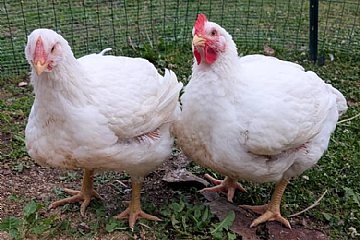
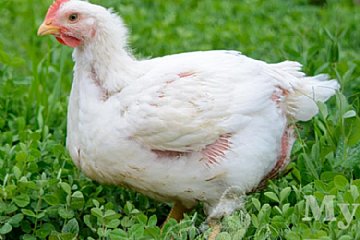
Red Rangers have a well-balanced frame and a more traditional chicken shape than a heavy, broad-breasted broiler.Most birds have dark red or russet plumage with black feathers in the tail and wing tips. Because Red Rangers are hybrids, color and markings can vary within the flock. They also have yellow beaks, shanks, feet, skin, and fat.
Their darker plumage does not create a major processing concern. Red Rangers pluck cleanly and produce an attractive finished bird.
Red Ranger Meat and Carcass Quality
Red Rangers are known for rich, flavorful meat and yellow fat. They produce a traditional-style carcass with a balanced proportion of breast and dark meat. Their long keel, developed wings, and longer legs create distinct cuts and a less breast-heavy carcass than Cornish Cross.The meat has a more pronounced chicken flavor than many people associate with a standard grocery-store bird. Feed, processing age, pasture access, and cooking method will also affect the final flavor and texture.
This makes Red Rangers a good choice for families who prefer richly flavored chicken and pasture-based farms serving customers who want a slower-grown table bird.
Who Should Raise Red Ranger Chickens?
Red Rangers are a good fit for growers who want:- An active meat chicken that uses outdoor space
- More flexibility around processing age
- Richly flavored meat with yellow skin and fat
- A broiler with traditional farm chicken behavior
If you are still comparing your options, our meat chicken guide explains how different broiler types fit different goals and setups. You can also browse all of our meat chickens for sale.
Frequently Asked Questions About Red Ranger Chickens
Do Red Rangers breed true?No. Because Red Rangers are hybrids, their offspring will not reliably have the same color, growth rate, body shape, or meat characteristics as the parent flock.
Are Red Ranger and Red Sasso chickens the same?
Myers Poultry previously sold its Red Ranger strain under the Red Sasso name. The birds are now listed as Red Rangers.
Are Red Rangers good pasture chickens?
Yes. Red Rangers are active foragers that use pasture well. They can be raised in chicken tractors, rotational pasture systems, or free-range areas with proper feed, shelter, and predator protection.
How large do Red Ranger chickens get?
Myers Poultry’s Red Rangers reach approximately 5 to 6.25 pounds live at 9 to 11 weeks with optimal care. Males finish larger than females, and the birds can be raised longer for additional size.
When should Red Rangers be processed?
Red Rangers are commonly processed at 9 to 11 weeks. They can be processed earlier for a smaller bird or kept beyond 11 weeks for a larger finished weight. If you plan to use a poultry processor, reserve your date before the chicks arrive. Our poultry processor directory can help you find one in your area.
Do Red Rangers have yellow skin and fat?
Yes, Red Rangers develop yellow skin and fat. In order to see the yellow skin, which typically gets removed when processing, you must scald at a lower temperature.
Are Red Rangers difficult to pluck?
No. Despite their dark red and black feathers, Red Rangers pluck cleanly and produce an attractive processed bird.
Can Red Rangers be raised with Cornish Cross?
Yes. Raising both breeds can help stagger your butcher dates because Cornish Cross reach market weight before Red Rangers. Separate flocks are easier to manage, but raising both gives you a longer, more manageable processing window while saving pasture space.
Order Red Ranger Chicks from Myers Poultry
Red Rangers are a strong choice for farms and homesteads looking for an active meat chicken that fits naturally into a pasture-based setup. Myers Poultry offers straight-run, male, and female Red Ranger chicks shipped throughout the United States.Before choosing a hatch date, use our guide to the best months to raise meat chickens to plan around the weather and your preferred processing window.
View available Red Ranger hatch dates and order chicks.